
When it comes to improving your home’s water quality, one of the most common questions homeowners ask is:
“What’s the difference between reverse osmosis vs other water filtration methods—and which one is right for me?”
With so many water treatment options available, it’s important to understand how each system works, what problems it solves, and which solution best fits your household’s needs. This is especially important here in California where water quality can vary widely by region.
In this guide, we’ll break down reverse osmosis vs other water filtration methods, explore their pros and cons, and help you choose the best system for cleaner, better-tasting water at home.
What Is Reverse Osmosis?
Reverse osmosis (RO) is a highly effective water filtration method that uses a semi-permeable membrane to remove contaminants from water. By forcing water through this membrane, RO systems can eliminate up to 99% of impurities, including:
- Dissolved salts
- Heavy metals (like lead and arsenic)
- Chlorine and chloramines
- Fluoride
- Nitrates and sulfates
- Microorganisms
This makes reverse osmosis one of the most comprehensive solutions for drinking water purification.
Reverse Osmosis vs Other Water Filtration Methods
To better understand reverse osmosis vs other water filtration methods, let’s compare RO to some of the most common alternatives.
1. Carbon Filters (Activated Carbon)
How they work:
Carbon filters absorb contaminants using a porous carbon material.
Best for:
- Removing chlorine and improving taste/odor
- Reducing some organic compounds
Limitations:
- Do not remove dissolved solids or heavy metals
- Less effective for comprehensive purification
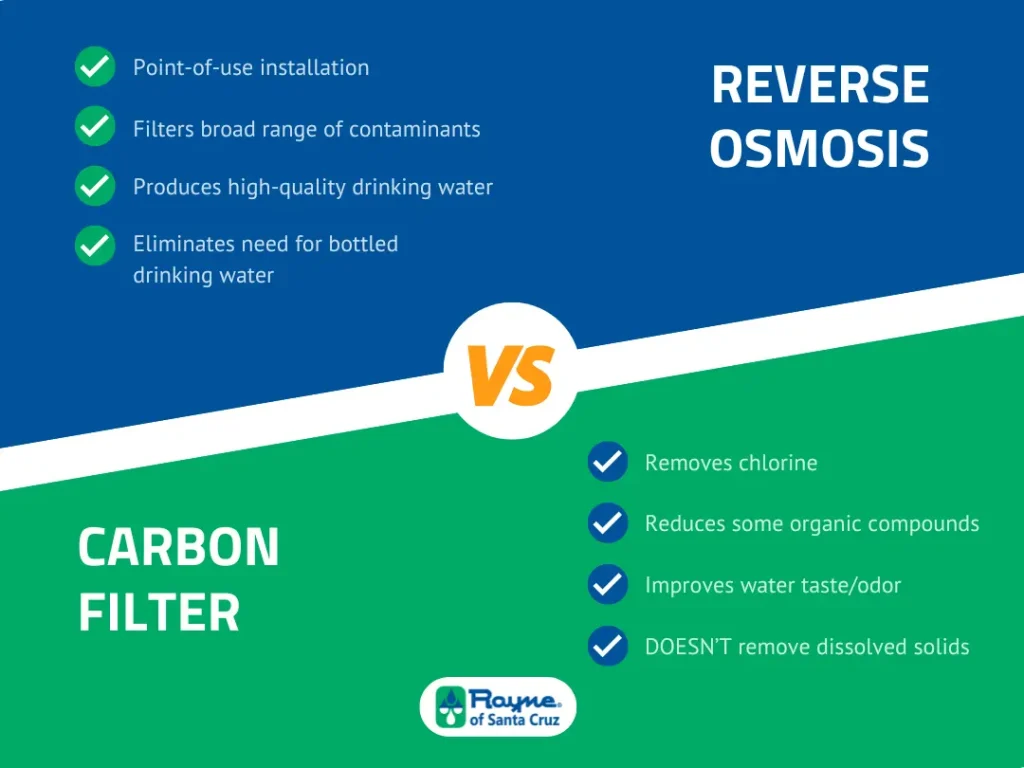
RO vs Carbon Filters:
While carbon filters improve taste, reverse osmosis goes much further by removing a broader range of contaminants, including those carbon filters can’t catch.
2. Water Softeners
How they work:
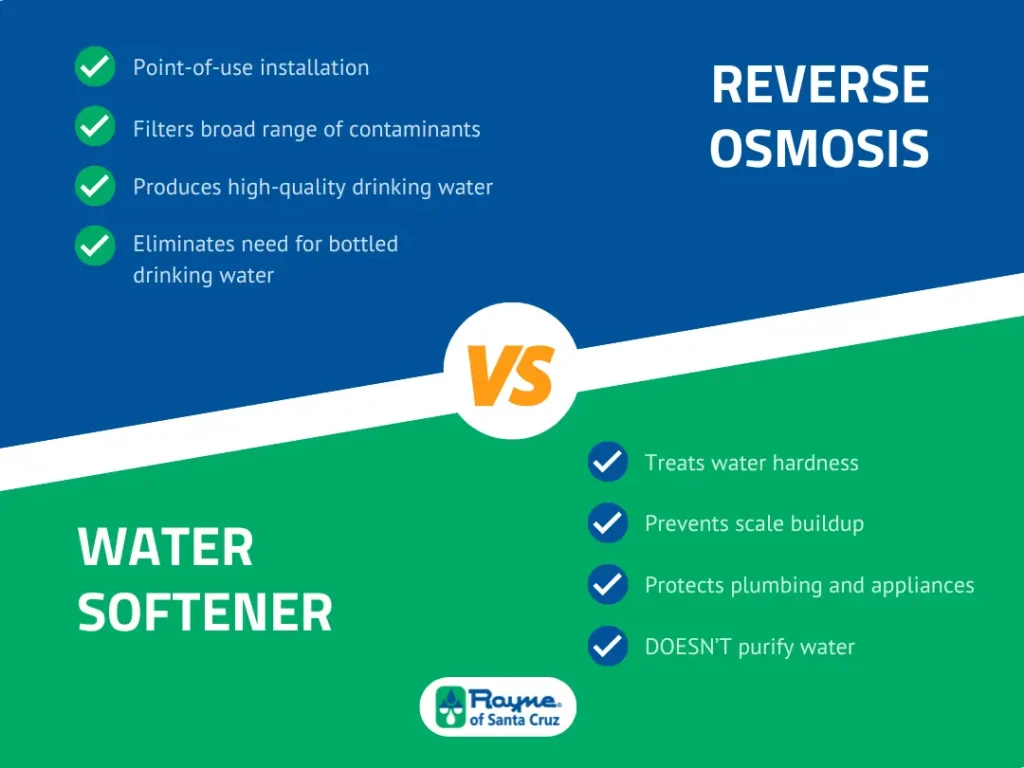
Water softeners use ion exchange to remove calcium and magnesium (the minerals that cause hard water).
Best for:
- Preventing scale buildup
- Protecting plumbing and appliances
Related article: Top 6 Benefits of Installing a Water Softener in Your California Home
Limitations:
- Do not purify drinking water
- Do not remove contaminants like chlorine or heavy metals
RO vs Water Softeners:
This isn’t an either/or situation. A water softener treats hardness, while a reverse osmosis system purifies drinking water. Many homeowners benefit from using both.
3. UV (Ultraviolet) Water Purifiers
How they work:
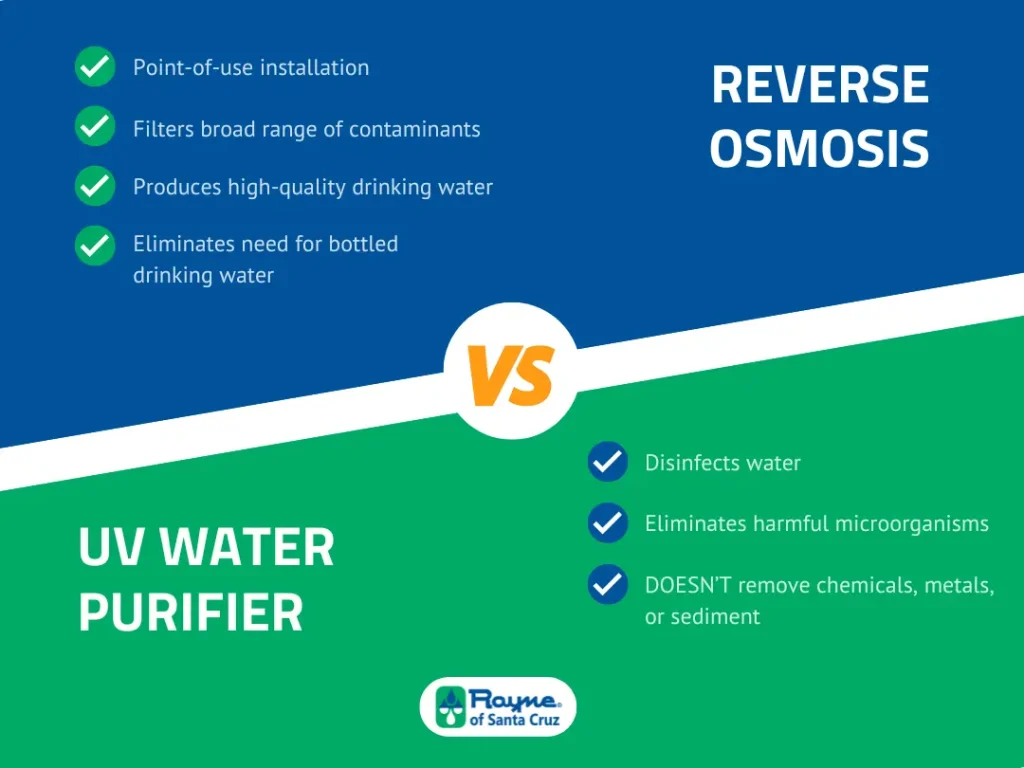
UV systems use ultraviolet light to kill bacteria and viruses.
Best for:
- Disinfection
- Eliminating harmful microorganisms
Limitations:
- Do not remove chemicals, metals, or sediment
RO vs UV Systems:
UV systems disinfect water, but reverse osmosis provides broader filtration, removing both biological and chemical contaminants.
4. Whole House Filtration Systems
How they work:
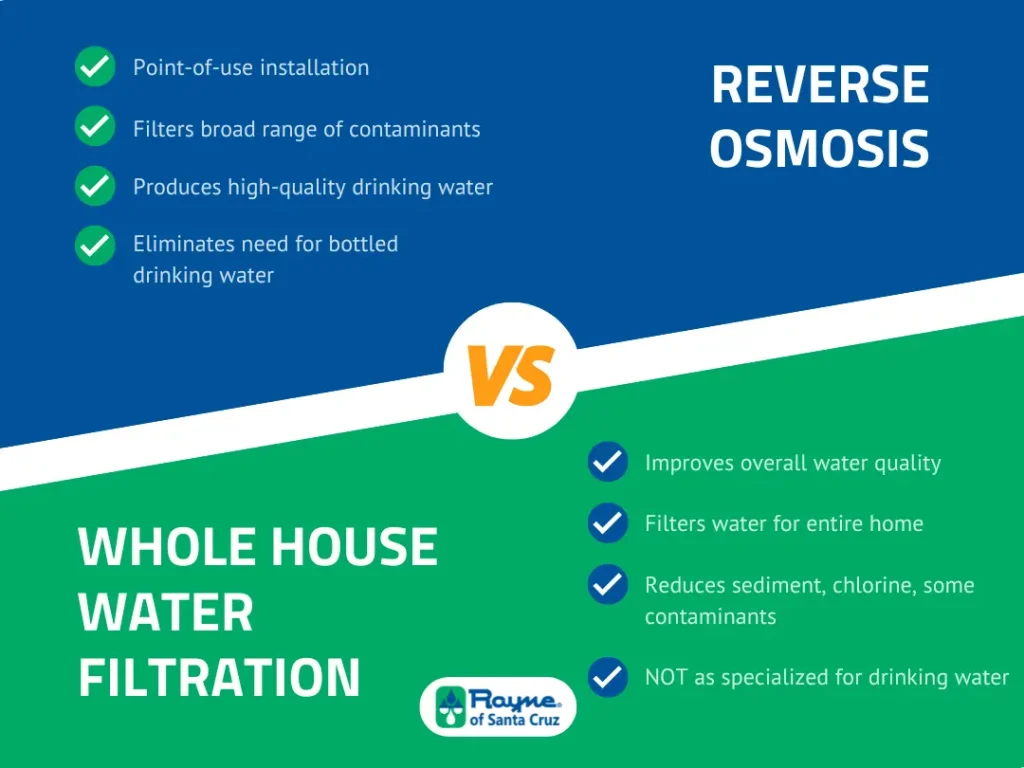
Installed at the point of entry, these systems filter water for the entire home.
Best for:
- Reducing sediment, chlorine, and some contaminants throughout the house
Limitations:
- Typically less specialized than RO for drinking water
RO vs Whole House Systems:
Whole house systems improve overall water quality, while reverse osmosis is ideal for high-quality drinking water at the tap.
What Water Problems Does Reverse Osmosis Solve?
When comparing reverse osmosis vs other water filtration methods, it’s important to look at the specific issues each system addresses.
Reverse osmosis is ideal for:
- Poor-tasting or foul-smelling water
- High levels of dissolved solids (TDS)
- Contaminants like arsenic, lead, and nitrates
- Chlorine and fluoride concerns
- Bottled water dependency
If your primary concern is clean, safe drinking water, RO is often the best choice.
Environmental Benefits of Reverse Osmosis vs Other Water Filtration Methods
One major advantage of reverse osmosis systems is their positive environmental impact, especially when compared to bottled water.
1. Reduces Plastic Waste
RO systems provide clean drinking water at home, significantly reducing the need for single-use plastic bottles.
2. Lowers Carbon Footprint
Bottled water requires manufacturing, packaging, and transportation. RO systems eliminate that cycle, making them a more sustainable option.
3. Minimizes Chemical Use
Unlike some treatment methods that rely heavily on chemicals, RO systems use a physical filtration process.
4. Efficient Water Use (Modern Systems)
Today’s advanced RO systems are designed to be more water-efficient than older models, reducing waste while maintaining performance.
How to Choose the Right Water Filtration System
When deciding between reverse osmosis vs other water filtration methods, consider the following:
1. Your Water Quality
Start with a water test or review your local water report. Identify:
- Hardness levels
- Contaminants present
- Taste and odor issues
2. Your Goals
Ask yourself:
- Do I want better drinking water? → Consider RO
- Do I want to protect my plumbing? → Consider a water softener
- Am I looking for whole-home water filtration? → Consider a whole house system
3. Your Budget
While RO systems are an investment, they often save money over time by eliminating bottled water purchases.
4. Maintenance Preferences
Some systems require more upkeep than others. RO systems do need periodic filter changes, but they’re generally straightforward to maintain.
Frequently Asked Questions About Reverse Osmosis vs Other Water Filtration Methods
Is reverse osmosis better than other water filtration methods?
It depends on your needs. Reverse osmosis is one of the most thorough filtration methods, but it’s best used for drinking water rather than whole-home treatment.
Do I still need a water softener if I have reverse osmosis?
Yes—if you have hard water. RO systems don’t remove hardness minerals efficiently at a whole-home level.
Does reverse osmosis waste water?
Older systems were less efficient, but modern RO systems are designed to minimize water waste.
Is reverse osmosis water safe to drink?
Absolutely. RO systems produce high-quality, clean drinking water that’s safe and great-tasting.
What’s the main difference between RO and carbon filters?
Carbon filters improve taste and remove chlorine, while reverse osmosis removes a much wider range of contaminants, including dissolved solids and heavy metals.
Upgrade Your Home’s Drinking Water Quality with a Reverse Osmosis System from Rayne of Santa Cruz
If you’re comparing reverse osmosis vs other water filtration methods, the right choice often comes down to your desire for clean, safe, great-tasting drinking water.
At Rayne of Santa Cruz, we offer advanced reverse osmosis drinking water systems designed to give you peace of mind and exceptional water quality right at your tap. Our team can help you evaluate your water, recommend the best solution, and handle professional installation for long-lasting performance.
Understanding reverse osmosis vs other water filtration methods is the first step toward making a smarter decision for your home. While no single system does it all, reverse osmosis stands out as one of the most effective solutions for high-quality drinking water.
Pair it with the right supporting systems—like water softeners or whole house filters—and you can enjoy cleaner, safer water throughout your entire home.
Ready to experience the benefits of reverse osmosis? Explore our drinking water solutions today!