Have you ever poured yourself a glass of water from the kitchen faucet only to notice that it smells or tastes a little like a swimming pool? If your water tastes like chlorine, you’re not imagining it. Chlorine is commonly used to disinfect municipal drinking water, and sometimes you can still detect its distinctive taste or odor by the time the water reaches your home.
The good news is that you don’t necessarily have to choose between drinking chlorinated-tasting tap water and buying bottled water. The right home water treatment system can significantly improve the taste and odor of your water.
At Rayne of Santa Cruz, we offer several water treatment options for homeowners who want better-tasting water, including reverse osmosis drinking water systems, whole house filtration systems and specialty filters. The right solution depends on what’s in your water, where you want it treated and what other water quality concerns you may have.
Why Does My Water Taste Like Chlorine?
Chlorine is commonly added during municipal water treatment to disinfect water and help control potentially harmful microorganisms as water travels through the distribution system.
Chlorine performs an important job, but there’s a downside from a taste perspective: some people can detect it in their drinking water.
The CDC notes that water containing chlorine can taste and smell different from untreated water, and those taste and odor effects may be more noticeable when chlorine levels are higher.
That’s why perfectly ordinary municipal tap water can sometimes have a:
- Swimming-pool-like smell
- Bleach-like odor
- Chemical aftertaste
- Stronger taste or smell at certain times than others
For homeowners who are sensitive to those tastes and odors, drinking a glass of water straight from the faucet may be less than appealing.
Is Chlorine in Tap Water Safe?
Noticing chlorine doesn’t automatically mean there’s something wrong with your water.
Municipal water providers use disinfectants such as chlorine or chloramine to help keep drinking water safe as it moves from the treatment facility through the distribution system and ultimately to your home.
Some utilities use chloramine, which is generally produced by combining chlorine and ammonia, as a longer-lasting secondary disinfectant.
Water containing properly regulated levels of these disinfectants can still have a noticeable taste or smell.
In other words, water can meet drinking water standards and still not taste the way you want it to.
That’s an important distinction. Home water treatment isn’t always about fixing water that is unsafe. Sometimes the goal is simply having water that tastes, smells and feels better to use every day.
Why Does My Tap Water Suddenly Taste More Like Chlorine?
You may notice that the chlorine taste isn’t always the same.
Water quality and taste can fluctuate for several reasons, including changes in water sources, treatment processes and conditions within the distribution system.
If you’ve suddenly noticed that your tap water tastes like chlorine when it didn’t before, don’t automatically assume you need to purchase a particular type of filter.
Instead, it’s worth determining what’s actually affecting your water.
A professional water quality evaluation can help distinguish chlorine-related taste and odor issues from other water quality problems and help you select treatment based on your actual water rather than guessing.
How Do You Get Rid of the Chlorine Taste in Tap Water?
There isn’t one filtration system that’s ideal for every home.
The first question to ask is: Where do you want better water?
Do you primarily want great-tasting water for drinking and cooking at your kitchen sink? Or do you want to reduce chlorine and improve water quality throughout your entire home?
That’s where the differences between reverse osmosis, whole house filtration and specialty filtration become important.
Option 1: Reverse Osmosis for Better-Tasting Drinking Water
If your main complaint is, “My drinking water tastes like chlorine,” a reverse osmosis drinking water system may be an excellent solution.
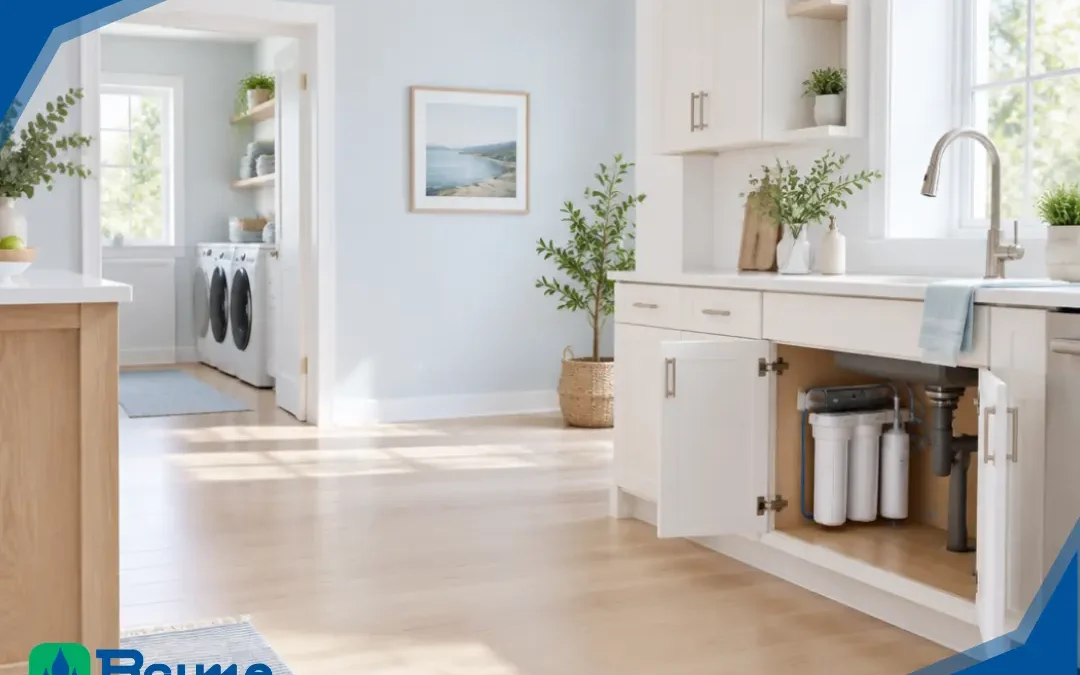
A reverse osmosis (RO) system is generally installed at the point where you use drinking water, such as beneath the kitchen sink. Instead of treating every gallon entering the home, it produces high-quality filtered water specifically for drinking and cooking.
Reverse osmosis uses a semipermeable membrane along with additional filtration stages to reduce a broad range of substances in the water. Depending on the system configuration, filtration stages can also address chlorine and unpleasant tastes and odors.
Reverse osmosis may be right for you if:
- Your biggest concern is drinking water quality.
- Your tap water has an unpleasant taste or odor.
- You want filtered water for drinking and cooking.
- You want to reduce dissolved solids in addition to addressing taste.
- You’d like an alternative to purchasing bottled water.
At Rayne of Santa Cruz, we offer drinking water systems designed to reduce dissolved solids and chlorine while improving taste and odor.
For many families, that means opening the kitchen faucet and having crisp, refreshing water available whenever they want it.
Option 2: Whole House Filtration for Removing Chlorine Throughout the Home
What if chlorine isn’t just bothering you when you drink the water?
Perhaps you also notice the smell when you:
- Take a shower
- Run a bath
- Wash your hands
- Use hot water
- Do laundry
- Turn on faucets throughout the house
In that situation, filtering only the kitchen drinking water may not accomplish your overall goal.
A whole house water filtration system treats water as it enters your home, before that water is distributed to your faucets, showers and appliances.
Whole house filtration may be right for you if:
- You want to reduce chlorine throughout your home.
- Chlorine taste and odor are concerns.
- You notice chlorine when showering or bathing.
- You’d like filtered water available from multiple faucets.
- You have additional sediment, taste or odor concerns.
For homeowners who want improved water beyond the kitchen sink, whole-house filtration can make much more sense than treating a single drinking water faucet.
Option 3: Specialty Filters for Specific Water Problems
Not every unusual taste or odor is caused by chlorine.
Water problems can also involve sediment, minerals, organic compounds, iron, manganese, hydrogen sulfide, acidity and other characteristics—particularly in homes using private wells.
That’s why at Rayne of Santa Cruz, we also offer specialty filtration systems designed to address particular water quality issues.
The key is matching the treatment technology to the problem.
For example, water that smells like rotten eggs may point toward a hydrogen sulfide issue rather than chlorine. Rust-colored staining may indicate iron or manganese. Acidic water can require an entirely different treatment approach.
Rather than buying a generic filter because your water “tastes funny,” identify the underlying problem first and choose a system designed to treat it.
Reverse Osmosis vs. Whole House Filtration: Which Is Better for Chlorine?
Neither is automatically “better.” They serve different purposes.
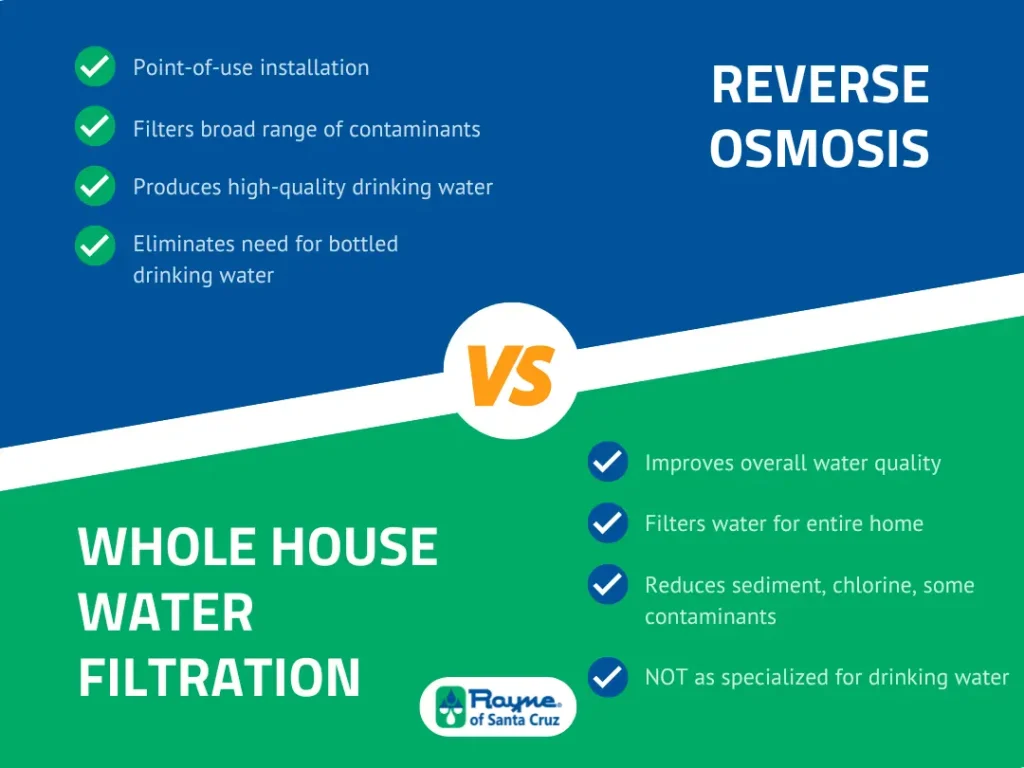
Some households can also benefit from both whole-house filtration and reverse osmosis.
The whole-house system addresses water throughout the home, while RO provides an additional level of treatment specifically for drinking and cooking water.
Will a Water Softener Remove the Chlorine Taste from Your Tap Water?
This is an important distinction.
A traditional water softener’s primary job is to address hardness minerals, particularly calcium and magnesium. These are responsible for problems such as mineral scale, spots on fixtures and inefficient soap performance.
A water softener is therefore not the same thing as a drinking water filtration system.
If your primary complaint is that your water tastes like chlorine, you need treatment designed specifically for your water’s taste, odor and filtration needs.
However, a home can certainly have both hard water and chlorine-related concerns. In that situation, a customized water treatment setup may incorporate softening and filtration technologies to address each problem separately.
Do I Need to Filter All the Water in My House?
Not necessarily.
Think about what you’re trying to accomplish.
If you’re happy with your household water but don’t like the taste of what comes from your kitchen faucet, treating your drinking water with an RO system may be all you need.
If you notice objectionable chlorine odors throughout the house—or simply want filtered water from every faucet—a whole-house system may be the more appropriate option.
And if your water has a very specific problem, a specialty filter may make more sense.
This is why choosing a water treatment system based solely on an online product description isn’t always the best approach. Your water should help determine your treatment.
Start With a Professional Water Quality Test
Before investing in water treatment equipment, find out more about the water coming into your home.
At Rayne of Santa Cruz, we offer a free basic water quality test to help identify your water concerns and determine which treatment approach makes sense.
Testing and professional evaluation can help answer questions such as:
- Is chlorine the primary reason my water tastes bad?
- Do I have hard water too?
- Are dissolved solids contributing to the taste?
- Would point-of-use filtration be sufficient?
- Would I benefit more from whole-house treatment?
- Are there other water quality concerns that require specialty filtration?
Once you understand your water, it’s much easier to choose the right solution.
Your Tap Water Doesn’t Have to Taste Like Chlorine – Find the Best Solution for Your Home Today!
Municipal water treatment plays an essential role in protecting public water supplies, but that doesn’t mean you have to settle for water you don’t enjoy drinking.
If your water tastes like chlorine, the best solution depends on what you want to improve.
For great-tasting water specifically for drinking and cooking, consider a reverse osmosis drinking water system. If you want to reduce chlorine and improve water quality throughout your home, a whole house filtration system may be the better choice. And if testing reveals a more specific water quality concern, specialty filtration can target the problem directly.

Rayne of Santa Cruz has been helping Santa Cruz County homeowners with water treatment since 1963. Our water treatment specialists can evaluate your home’s water and recommend a solution based on your actual water quality and your family’s needs.
Ready to stop wondering why your tap water tastes like chlorine? Contact us at Rayne of Santa Cruz today to schedule your free water quality test and find the right filtration solution for your home.